


How Automation and Electrification Are Changing Fleet Management
Learn how automation and electrification help fleets manage growing complexity.
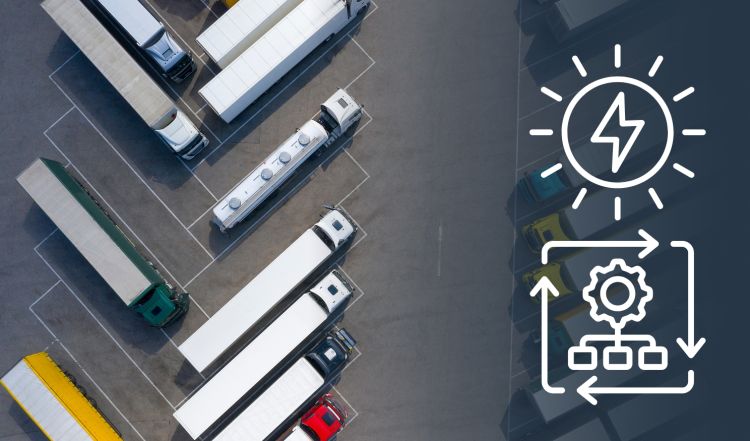
Fleet management is becoming increasingly complex. Fleets are under pressure to reduce operating costs and emissions, comply with stricter regulations, and deliver more with fewer resources. At the same time, labor shortages and rising service expectations make traditional, manual processes harder to sustain.
In this context, automation and electrification are practical responses to the challenges shaping modern fleet operations. Rather than replacing existing practices overnight, these changes help fleets transition toward more predictable, efficient, and data-driven operations.
Automation Brings Control to Operational Complexity
As fleets expand and operations become more complex, the volume of data generated daily increases substantially. Managing vehicles, drivers, maintenance, compliance, and reporting manually quickly becomes time-consuming and error-prone.
Automation helps fleet managers regain control by reducing repetitive tasks and ensuring that critical information is always up to date. Automated alerts, reports, and real-time monitoring allow you and your team to focus on decision-making rather than administrative tasks.
Automation supports fleet operations by enabling:
- Continuous monitoring of vehicles and operations;
- Automatic reporting and alerts;
- Preventive maintenance planning;
- Fewer manual errors and faster response times.
This shift allows fleets to move from reactive management to a more proactive and structured approach.
Electrification Changes How Fleets Operate
The adoption of hybrid and electric vehicles introduces new operational considerations, such as range limitations, charging availability, energy consumption, and route suitability. Without proper planning and visibility, these factors can add complexity. Still, when supported by reliable fleet data, electrification becomes an opportunity to reduce emissions, lower operating costs over time, and align fleet operations with urban and environmental policies.
Fleet managers increasingly need to:
- Plan routes around vehicle autonomy;
- Adapt schedules to charging requirements;
- Monitor energy consumption and emissions;
- Compare performance across different powertrains.
Automation and Electrification as a Strategy
Automation plays an important role in making electrification operationally viable, as automated monitoring of battery status, energy consumption, vehicle availability, and charging requirements reduces uncertainty and simplifies daily decision-making. When routing, charging, reporting, and performance tracking are fully automated, electric vehicles become easier to manage alongside conventional fleets.
By combining automation with electrification, fleets reduce operational complexity instead of increasing it. Data-driven planning, automated insights, and clear visibility allow managers to optimize performance, control costs, and support sustainability goals. When adopted gradually and guided by reliable data, this unified approach helps fleets gain stronger operational control, improve efficiency, and remain resilient as operational and regulatory demands continue to evolve.
Looking to simplify operations while preparing for electric mobility? Talk to our fleet experts and see how fleet management software can streamline your operations and support the transition to electrification.